We’ll keep this week open to respond to your evolving interests and needs. Perhaps we’ll schedule a field trip to a local archive, engage in a collective digital ethnography project, or look more deeply at a few subfields of study or ethical concerns we haven’t yet had time to explore. Perhaps we’ll try out some of the speculative activities (e.g., designing our own measures and statistics, or developing methods for non-human investigation) Christian Sandvig uses in his “Unorthodox Methods” class. We’ll figure it out.
Today we’ll visit two exhibitions that engage with themes of embodiment across media forms, and we’ll consider methods of exhibition design and critique, as well as methods of close reading media in a range of formats — from textiles to wall labels to white boards to screens 🙂
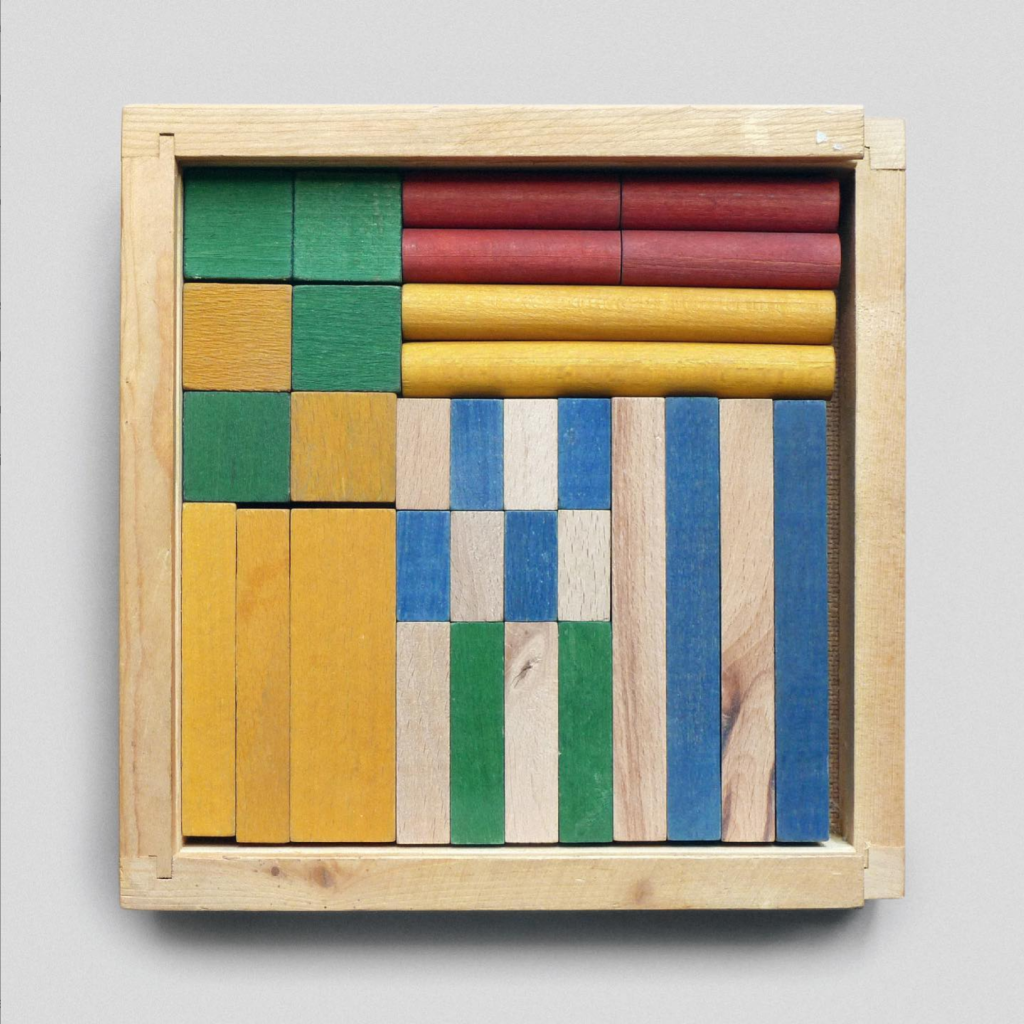
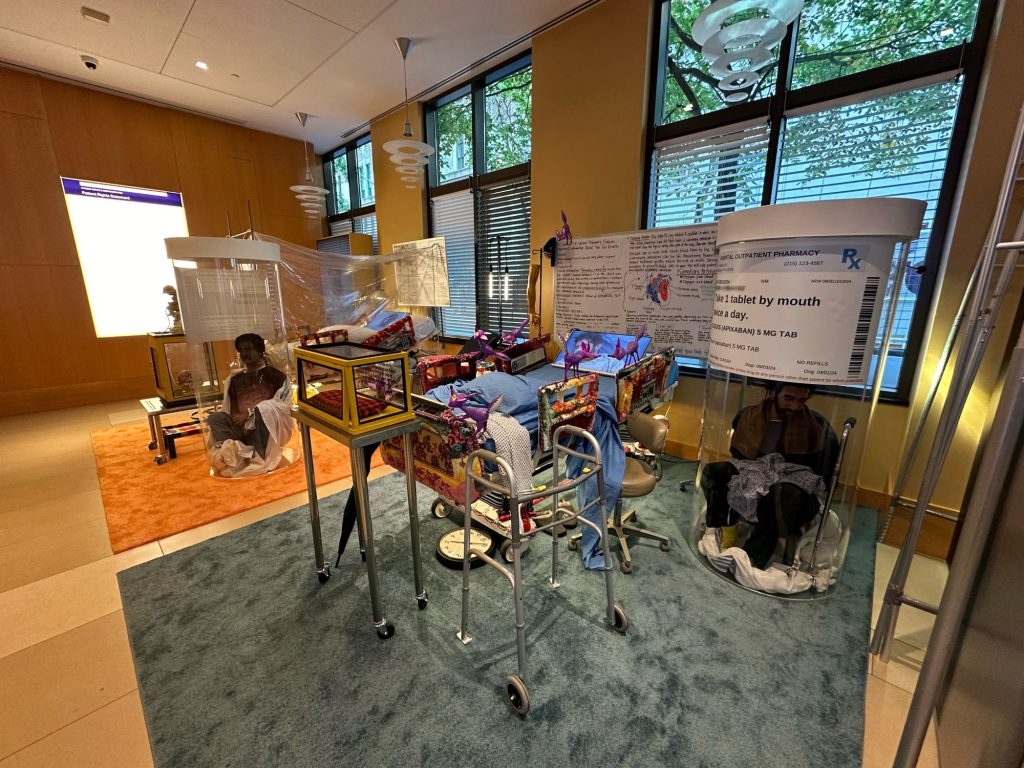
We’ll meet at the Fabric Workshop (1214 Arch Street) at 3:30pm, where we’ll enjoy a quick guided tour of their “Soft/Cover” exhibition with Katie Parry, the FWM’s Public Education Program Manager, then explore on our own. After that, we’ll head over to see Pepón Osorio’s Convalescence, in the lobby of Thomas Jefferson University’s health sciences campus (901 Walnut Street), where we’ll meet Osorio’s studio manager, Amy Oh, at 5pm.
To Prepare for This Week:
- Explore the Fabric Workshop’s Museum’s website, and please make sure to read about their history and mission and the “Soft/Cover” exhibition we’ll be exploring!
- Supplemental: Consider the tangle of historical threads connecting textiles and media — from quipu to quilts, semiconductors to smart fabrics. If you’d like to learn more, check out the work of James Essinger, Matt Cohen and Jeffrey Glover, Lisa Nakamura, Ganaele Langlois (and many other scholars, artists, and designers!).
- Explore the Convalescence website and read or watch Dan Cameron’s interview with Pepón Osorio for the Brooklyn Rail (October 2024).
- Supplemental: The Rail’s New Social Environment series is a fabulous resource! There’s also some great art historical scholarship and contemporary critical writing on Osorio as a mixed-media installation artist!
- Read Peter Crimmins, “‘Convalescence’ at Philly’s Jefferson Hospital Is an Immersion into Health Care Iniquities,” WHYY (September 2, 2024).
SUPPLEMENTAL: I also encourage you to spend some time thinking about project management and tools that can aid our research.
On Project Management:
- Skim Jessica Calarco, “Staying on Track in Your Program,” A Field Guide to Grad School: Uncovering the Hidden Curriculum (Princeton University Press, 2020): 119-51.
- Here’s how some graduate students use various tools to manage their projects, time, and resources. I share these references not to be prescriptive — some of these folks’ approaches can indeed feel a bit tech-fetishistic! – but, rather, to invite you to explore, test, adopt, and reject tools as you see fit.
- Emily Hokett, “Project Management in Craft Docs: Here’s My Experience with a Tight Academic Schedule,” Medium (May 7, 2022); Research Craft (a video interview series featuring historians) on “Academic Productivity Hack #1: Capturing, Organizing, and Accessing PDFs,” YouTube (2020) [video: 6:38], and on using Tropy [video: 29:01], a tool to support archival research; Genevieve Shanahan, “PhD Tips: How I Get Organized,” Medium (September 23, 2019); Mariana Viera, “Plan Your PhD with Notion,” (2022); and this, among other relevant threads, on Reddit’s r/PhD. Note that Penn Libraries offer tutorials on many citation management tools.