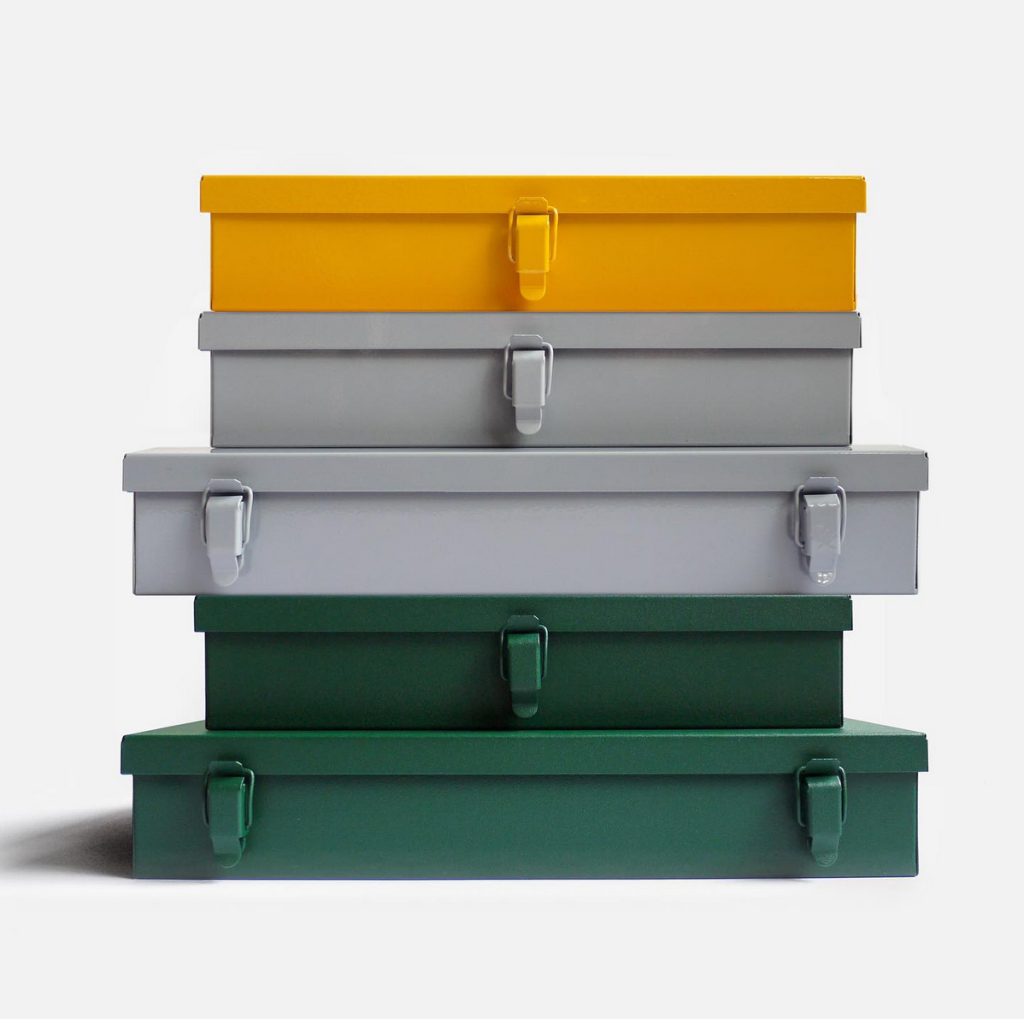
As you prepare your project proposals for submission next week, we’ll use this week’s class to further encourage you to think creatively and capaciously about theory and method — and about how to design complementary assemblages of theories and methods — by exploring the model of the toolkit. We’ll then get extra-“meta” by experimenting with theoretically-informed methods for designing, or prototyping, creative methods.
WORKSHOP, 4:30-5:45pm: Katie Giritlian from paper camera press has invited us to test their new Paper Camera Study Pack. Katie will join us at 4:30 to introduce the project, we’ll break into small groups to engage with the kit, and then Katie will re-join us near the end of our session to solicit our feedback on the study pack, which she’ll then use to iterate its next version, and to discuss her goals for the project and the broader mission of paper camera press.
OPTIONAL: 6:00-7:30: Anna Tsing on Concrete @ Widener Lecture Hall, Penn Museum, 3260 South Street [register here for in-person or virtual attendance!]
TO PREPARE FOR TODAY:
- Share one of your three reading responses by noon, if you like.
- Read Shannon Mattern, “Unboxing the Toolkit,” Toolshed (July 9, 2021).
- Explore a few theory-and-method kits: skim through Michael Newman’s The Media Studies Toolkit (Routledge, 2022) [available through Penn Libraries]; Tactical Tech’s “Exposing the Invisible” kit for investigative researchers; and this Arena channel of “Fieldwork Toolkits.”
- Skim through our Fall 2023 colleagues’ “Cinema and Media Studies Methods Toolkit” contributions — particularly Elspeth Gow on “Clutter as Method,” Xavier Xin on “Critical Fabulation,” Emily Grybos on “Critical Technosocial Discourse Analysis,” Basak Eren on “Feminist Archival Research,” and Mary Campbell on “Visual-Textual Analysis.”
- And as we prepare to test paper camera press’s study pack, let’s think about prototyping as a method of methodological development: Read Alberto Corsín Jiménez, “Prototyping” in Celia Lury et al., Routledge Handbook of Interdisciplinary Research Methods (Routledge, 2018) [available through Penn Libraries; the whole book is worth a skim!].
- Katie has offered a prompt: “The Paper Cameras Study Pack is a set of cards for critically studying photographs and articulating the relationships that make, and are made by, our images. On September 18th, students will use this deck to study one photograph of their own choosing.
…..As you think about your semester project (for which you’ll submit a proposal next week!), pick one photograph that offers an entry point into the relationships, bodies of knowledge, and research to which you hope to attend. You can think of this photo as something that may ultimately be included in your final project, or simply as a material jumping off point that helps you warm up and start thinking about the many relationships and fields of your project.
…..The cards function as viewfinders and invite tactile learning. If you are able to, I invite you to print your photo in some form, if it doesn’t already exist as a physical print. It doesn’t need to be a nice print, but just something tangible you feel comfortable touching. If printing is too tricky, no worries!! Using the cards to look at your photo on one of your digital devices can also work.”